Wednesday, June 25, 2014

Doing What is Right: Genesis 4:1-8

In Genesis 4 Cain and Abel are both presented as productive members of God’s creation.  Respectively working as a farmer and a shepherd, both men are duly fulfilling the God given command to “fill the earth and subdue it” (Gen. 1:28).  What is more, both of them choose to worship God by bringing a portion of their labors as an offering to the Lord.  Their acts of worship are particularly telling because to this point God has never commanded acts of sacrifice and worship.  They worship God not out of duty or obligation, but out of a natural response of gratitude for what God has given them. 

And yet, for someone reason God looks upon Abel’s offering with favor, and does not look with favor upon Cain’s.  Why?  What would cause God to respond so differently to these two offerings?

It has often been said that Cain’s offering was inferior to Abel’s.  While Cain brought “some fruit of the soil,” Abel brought “fat portions from some of the firstborn of the flock.”  Abel takes from the best of his flock and offers it to God, while Cain just takes some of his produce (not necessarily his best).  God’s favor goes to Abel because Abel’s offering is more reflective of a faithful sacrifice to God.

While that may sufficiently explain Cain’s lack of favor, I wonder if there is there something deeper happening in this passage.  For a farmer like Cain God’s favor would look like perfect amounts of rain and sun leading to an abundance of crops.  A season of drought and famine would cause a farmer like Cain to doubt God’s favor. 

What if, after dutifully working the land and making his offering to God, a drought overtook Cain’s farm, while Abel’s flocks continued to multiply?  That would almost certainly lead Cain to conclude that God was showing favor to Abel and none to him.  How many of us have looked at the success of others in the midst of our own troubles and wondered, “God, why do they have such success while I continue to struggle?”

With his face downcast, and his heart feeling dejected, Cain becomes angry with God.  But God isn't angry with Cain.  As a matter of fact, God is concerned about Cain.  God says to him, “Why are you angry?  Why is your soul downcast?” (Genesis 4:6).  While Cain believes that he has lost God’s favor, God hasn't come to that conclusion.  “If you do what is right, will you not be accepted?” (Genesis 4:7).

In the midst of his troubles and anger God calls on Cain to “do what is right” – to continue to live according to God’s design.  The reality of sin, introduced to world in Genesis 3, means that in life there will be trials and struggles.  Droughts, famines, and misfortune can come even to someone who works hard and tries to please God.  In the midst of such troubles, God’s call is to do what is right.  Even when the days are hard, God’s call is to continue to live faithfully and to worship God. 

Unfortunately Cain chose differently.  Rather than remaining faithful to God in the midst of his struggles, he chose to take the life of his brother, in an act of jealousy, rage, and anger.  It’s a sad story about the challenges of navigating a world broken by the effects of sin.

How do you respond to trials and struggles in your life?  Do you assume that God is causing trouble to come your way?  Do you blame God for your problems?  The reality is that all of us will experience troubles in this life.  While they may not come to us in equal measure, we will all have days when nothing seems to go our way.  That’s the consequence of living in a sinful world. 

The challenge Genesis 4 lays before us is, “can we continue to do what is right and be faithful to God, even in the midst of our troubles?”  For our troubles are not, in fact, a sign that God has rejected us, but they are moments that test our faith.  It’s easy to have faith when the days are good, but it’s difficult when the days are hard.  May God give us a strong faith, that we might persevere in doing what is right, even in our troubles.

Wednesday, June 18, 2014

A Story for All Ages

Note: This post marks the beginning of a summer long series of devotions on the book of Genesis. Each Wednesday a new devotional will be posted.  These devotions are intended to be a companion to with Faith UMC's summer sermon series, "The Gospel According to Genesis" and the daily reading guide to Genesis.  You can access sermon online here and the daily reading guide here.

Imagine that you are an Israelite child, living in Babylon in 570 B.C.  Seventeen years ago your family was deported from Jerusalem when the Babylonian army laid siege to the city.  While you yourself have never stepped foot in Jerusalem, your parents always speak of the city with awe and reverence.  They tell you stories about how God created the heavens and the earth, and everything contained therein.  They speak of God’s goodness to humanity, and of humanity’s mistrust and disobedience to God.  They speak of a covenant God made with your ancestor Abraham, promising that through his family God would bring blessing to the whole world.  They recall that God promised the land of Jerusalem as an inheritance to Abraham’s family.
           
As you listen, you feel in your heart that these stories are your story.  While you weren't there when the world was created, you believe that you too were created by God.  While you never met Adam and Eve, you can relate to their mistrust of God and inability to keep God’s commands.  While you never met Abraham, you feel a kinship with him and a desire to be faithful to the covenant God started with him centuries ago.  You are a member of the people of Israel, and while all you have ever known is life in Babylon, you feel like your heart is in the Promised Land.
           
The book of Genesis was written so that the people of God from all generations might know where they come from, and their reason for existence.  Genesis – which means beginning – tells the story of God’s creation of the heavens and earth and of the beginning of God’s people, Israel.  The book is divided into two parts.  Chapters 1-11 tell a universal story about the creation and crisis of humankind.  They speak of humanity’s call to live in God’s image, how human sin distorts that image, and how the effects of sin spread so far across the earth, that God grieved the earth and laid waste to it by flood.

By the end of chapter 11, the story of Genesis has come to a major impasse.  A good and gracious God has created a good and beautiful world, but human sin continues to spread and disrupt God’s design, bringing death and destruction.  What will happen to world?  Will it die away, a victim of its own sin, or will God do something to rescue the creation?

The second part of Genesis, chapters 12-50, tells the story of what God does to redeem the world.  Rather than destroy the sinful world, God chooses to enter into relationship with a man called Abraham, promising to bring blessing to all the world through his family.  The story continues through four generations of Abraham’s family, showing how God remains faithful to the promise of blessing, even amid the continual failings of Abraham’s family.

This is the story of Genesis.  As the ancient Israelites knew from the beginning, the purpose of Genesis is not to provide a detailed historical account of the creation of the world.  Neither is it to provide scientific explanations for the various phenomena of the universe.  None of them expected Genesis 1 to be a literal account of the creation of the world, nor did they expect to be able to locate the bones of Adam and Eve in Mesopotamia.  Rather they knew that the purpose of Genesis is to convey the truth about the human condition and the good news about the God who loves the world too much to let it go.

As we enter into a summer long immersion in the book of Genesis, it’s important that we know what Genesis is for.  If we want to read every detail of the story as historical or scientific fact, we will quickly get frustrated and miss the point.  Many of the stories of Genesis, particularly in chapters 1-11, are full of symbolism and imagery that is not meant to represent what actually happened, as much as to convey truth about who God is and who we are.


As you read Genesis, pray that God would help you find yourself in these stories.  Pray that God would open your eyes to see God as he really is.  Pray that these stories would convict you of your own frailty and brokenness.  And above all, pray that these stories would become your story, that you too would believe that the same God who created the universe and called Abraham, is the God who created and called you.             

Tuesday, September 3, 2013

Praying for Syria

Last week, my heart broke as I sat down to the evening news and saw images of the 1400+ Syrians mercilessly killed at the hands of their own leader.  A civil war that has waged for several years and claimed over 100,000 lives was suddenly hitting close to home.  I cannot imagine the fear, grief, anxiety, and pain the Syrian people are experiencing.

My heart sunk even deeper on Saturday when I heard our President calling for our own nation to respond to the Syrian crisis with a military strike.  I have prayed and worried for my older brother as he served in Iraq and Afghanistan, and the thought that our nation may again become embroiled in war overwhelms me. 

And yet, our President, Congress, and other international leaders find themselves in a difficult situation.  To do nothing sends the signal that the international community will sit idly by while innocent life is taken.  To take military action is to respond to violence with violence, which will neither solve the Syrian crisis nor bring about a lasting peace.

No matter how the international community chooses to respond to this crisis, we who follow Jesus have only one appropriate response: prayer.  God’s desire is that none of His children war with each other, that no one be victimized by brutal violence, and that all live at peace.  In his death and resurrection, Jesus broke the cycle of violence and death that plagues our world and created the conditions for a true and lasting peace.

Pope Francis has invited people of faith around the world to observe a day of prayer and fasting for the people of Syria this Saturday, September 7th.  I myself intend to join with brothers and sisters across the world in observing this solemn day.  I will fast from sun-up to sundown, and spend time through the day praying for the victims, for the peaceable end to the civil war, for those working for peace and justice, and for national and international leaders as they discuss a response.  I encourage all of you to join me and brothers and sisters around the world in this day of fasting and prayer. 

In our worship service this Sunday, we will continue this observance with a special time of prayer for the people of Syria.  No matter what your opinion on this matter (and our opinions are many), prayer is our way of acknowledging that the challenges of our world cannot be met by politicians, generals, or cruise missiles, but only by the power of our great and gracious God.

Wednesday, July 31, 2013

In it for the Long Haul

“If I say, ‘I will not mention God’s word, or speak anymore in God’s name,’ his word is in my heart like a fire, a fire shut up in my bones.  I am weary of holding it in; indeed, I cannot” (Jer. 20:9).

Every year at Annual Conference (a gathering of United Methodist clergy and lay leaders) we honor those pastors who are retiring.  I am always amazed at the number of retirees who have served 40+ years in active ministry.  That’s 50% longer than my lifetime (to date)!  In a day and age where the average person changes careers three times, it’s remarkable to recognize those who have stuck with something for four decades.

If our ministry is a race, then God is calling us to be
the tortoise, not the hare.
Jeremiah’s ministry as a prophet also lasted forty years (627-587 BC).  He first began speaking God’s Word as a young teenager.  Over the next forty years he would continue to speak God’s Word through some of the most tumultuous and challenging days in the history of Israel.  In Jeremiah’s lifetime he witnessed the demise and fall of the holy city of Jerusalem – a demise rooted in the reckless faithlessness of the people of God.

Imagine how difficult it was for Jeremiah to stick to it – to get up every morning with a willingness to be faithful to God’s message, even though it seemed few were willing to listen.  How did he do it?  How did Jeremiah make it forty years in such a difficult vocation?

The answer is that Jeremiah was deeply connected to God.  Hardly a page goes by in the book of Jeremiah where we don’t find the prophet on his knees in prayer, asking God to clarify his purpose, free him from suffering, give him strength to carry on.  Jeremiah’s heart was so passionately devoted to God’s purpose for him, that he found he couldn't quit.  There was a fire in his bones.

As we begin our fourth year together in min
istry at Faith UMC, I am reminded that we have just begun.  God has called us to be in ministry with our community and world.  It is a calling that includes welcoming all people to worship God with passion, grow deeply in Christian faith, and serve Christ in community.  And while God has begun some good work among us in these past years, we have barely started on the journey God has for us.  We have not been called to a short-term ministry, but to a lifetime of ministry.  And what we learn from Jeremiah is that if we want our ministry to last a lifetime, then we must be deeply and passionately connected to God.


Do you have the kind of faith that gets you out of the bed in the morning ready to serve Christ?  Are you passionately devoted to God’s Word, seeking to know and live out the scriptures?  Do you regularly connect with God through prayer and worship?  Does your connection to Christ enable you to be in ministry for the long haul?   

Tuesday, July 16, 2013

Get Ready to Get Wet!

Before ascending into heaven, Jesus left his followers (including us!) with the one last command: “Go and make disciples of all nations, baptizing them in the name of the Father, and of the Son, and of the Holy Spirit” (Matthew 28:19).  This Sunday, we have a very special opportunity to do just that.

It’s been nearly a year since Jeff Vasalech first joined us in worship.  He moved to the Pittsburgh area from Monterey, CA seeking a fresh start in life.  Over the past year, it has been my joy to journey with Jeff as Jesus has given him the fresh start he was looking for.  In our conversations together, Jeff and I have read the scriptures closely, prayed for God’s transforming grace to be at work in his life, and marveled at how Jesus has made Jeff a new person. 

Now, convinced that he is called to follow Jesus all his days, Jeff is ready to be baptized.  Baptism is an act of God’s grace, in which water symbolizes the cleansing power of God’s forgiveness, and our acceptance into God’s eternal family.

Jeff’s desire from the beginning has been to experience a deep water, full immersion baptism.  This Sunday at 2 p.m., we will hold a special baptism service for Jeff at Campbell Lake.  The lake is owned by owned by a local family and is close to the church.  Out of respect for the family, I will not publish their address on the world wide web, but you can call the c
hurch office (412.963.8155) or email me (pastortom@faithfoxchapel.org) to get the address.

I want to invite you to come and share in this special service.  Baptism is an act of the church, and so it is important that as many of us as possible be present for the service, to witness God’s grace at work in Jeff’s life and to remember our own baptism. 

Following Jeff’s baptism, you will have the opportunity to remember your baptism.  You will be invited to enter the water in whatever way you choose (you can simply dip your feet in, or fully immerse yourself) and I will offer a short prayer over you, asking God to remind you of your place in God’s family.  Feel free to wear your swimsuit and a t-shirt and bring along a towel should you wish to wade deep into the water.


Words can hardly express how excited, honored, and humbled I am to have the opportunity to share in this special service.  I hope to see you there.

Monday, July 1, 2013

The Prophetic Power of Tears

“Oh, my anguish, my anguish!  I writhe in pain.  Oh the agony of my heart!  My heart pounds within me, I cannot keep silent” (Jeremiah 4:19).

“Is there no balm in Gilead?  Is there no physician there?  Why then is there no healing for the wound of my people?  Oh, that my head were a spring of water and my eyes a fountain of tears!  I would weep day and night for the slain of my people” (Jeremiah 8:22-9:1).

There are a lot of tears in the book of Jeremiah.  So many, in fact, that we could easily call Jeremiah the crying prophet.  Tears are a crucial part of Jeremiah’s prophetic ministry.  His tears convey the deep ache in God’s heart over the brokenness of the world. 

Jeremiah lived in a time of great uncertainty and grave sin.  The people of Israel had strayed so far from God that it seemed they were doomed to die in a foreign land.  Seeing clearly the fragility of the situation, Jeremiah cried.  His tears spoke the powerful message that something is deeply wrong – things are not as they are supposed to be.

While Jeremiah’s tears express his agony and grief over his personal sufferings, they also express the ache of God’s heart.  God takes no pleasure in the suffering of Israel.  The wound of their sin is self inflicted, and God weeps for them as a parent weeps over the loss of a child.  Jeremiah’s tears are also God’s tears.

If we’re honest, you and I aren’t comfortable with tears.  When someone cries, we’re quick to wipe their tears away and say “there, there, don’t cry, it will be alright.”  When we read the book of Jeremiah, we’d prefer to skip past the tears and get on to the more hope-filled passages, where God’s promise of restored life is the focus.

But tears play such an important role in God’s work of salvation.  There is no salvation without tears, for weeping permits newness.  It’s why Jesus wept before raising Lazarus from the grave (John 11:35).  It’s why he wept in the garden of Gethsemane before being crucified and raised (Mark 14:34).  Tears are the prelude of resurrection!

In the sermon on the mount, Jesus said “Blessed are those who mourn” (Matthew 5:4).  Those who shed tears of grief are blessed because they are the ones who see clearly that we need the salvation Jesus brings.  In our lives, when we shed tears over the death of a loved one, the suffering of a child, or the loss of a relationship, our tears are our acknowledgement that we need to be saved – we need God’s help.  Our tears open us to the possibility that God has something more for us – that we need new life.

What makes you weep?  How have your tears unveiled your need for God’s grace?  How can God work through your tears to bring you new life?

Thursday, June 27, 2013

We are Not Our Own

"I know, O Lord, that our lives are not our own, that we're not able to direct our paths" (Jeremiah 10:23).

It's not about me.  That might be one of the most difficult lessons to learn in our culture.  We live in a "me-first" culture, where my dreams, my interests, my goals are exalted above all else.  Yet, one of the fundamental messages of the scriptures is that if I put myself first, I am doomed to failure.

That's essentially what happened in Jeremiah's day.  Convinced that they knew a better way to live than the one God had designed for them, the people of Israel went their own way.  They made their own gods, with their own hands.  They made their own rules and laws.  They pursued their own dreams.  They ignored the God who freed their forbears from slavery in order to pursue their own way of life.

As the people of Israel would soon discover: God ways are higher than our ways, and God's thoughts higher than our thoughts.  Our ways will ultimately lead to our doom.  The destruction of Jerusalem and the exile of the people of Israel is the result of Israel's attempt to make their own way in life.

Jeremiah's reminder to the people of Israel is also a timely reminder for us.  "Our lives are not our own."  We didn't make ourselves.  We were made by God for God's purpose.  Everything we have, and everything we are belongs to God alone.  And that's a good thing, because all of God's ways lead to life.

Are you living your life for yourself, or have you surrendered your life to God?  Is your first priority your own desires, or do you seek what God desires for you?  What needs to change in your life in order for God to be first?  


Wednesday, June 19, 2013

Hypocrisy, The Church, and Following Jesus

Hypocrite: “A person who acts in contradiction to his or her stated beliefs or feelings.”

Run a Google search on the word “hypocrite” and you’ll discover that for many the word is synonymous with “Christian.”  According to the Pew Research Forum, hypocrisy is one of the most common reasons why many Americans don’t go to church. 

In his book They Like Jesus but not the Church, Dan Kimball writes, “Ask someone today if he or she likes Jesus, and the answer is usually yes.  But ask if that person likes the church, and chances are you will get a far less favorable response.”  While Jesus teaches a gospel of inclusion, grace, hope and love, Kimball notes that many have experienced the church as a place of exclusion, judgment, negativity, and rejection.  Sometimes when it comes to sharing Jesus with the world, the church gets in the way.

Lest we think that hypocrisy is a new phenomena, we remember that the struggle to live out our beliefs is as old as the human race.  In Jeremiah 7, God sends the prophet Jeremiah to the temple to convict the people of Israel of hypocrisy:

“Will you steal and murder, commit adultery and perjury, burn incense to Baal and follow other gods you have not known, and then come into this house which bears my Name, and say ‘we are safe?’ (Jeremiah 7:9-10).

The people of Israel were hiding their sins behind the walls of the temple.  They came to the temple on the Sabbath to make the proper sacrifices and confess their sins, but then they left and did whatever they wanted the rest of the week.  They treated God’s forgiveness as an excuse to do whatever they pleased.  They were hypocrites.

Jeremiah’s exhortation to the hypocrites of Israel is instructive: “Reform your ways and actions” (7:3).  In other words, practice what you preach.  True worship of God is not just what happens inside the temple.  True worship entails a total way of life.

James 2:26 says “faith without works is dead.”  Following Jesus entails much more than believing the right doctrines, saying the right prayers, or being in church every Sunday.  Following Jesus is a total way of life.  What we say and do on Sunday morning must cohere with how we live Monday through Saturday.

Is your life consistent with what you believe?  How does the faith you profess on Sunday morning impact the way you live the rest of the week?  In what ways are you hypocritical?  How can your life better reflect the values of Jesus?  How is God challenging you to “reform your ways and actions” so that you may live a life that reflects the gospel you believe?
      

Wednesday, June 12, 2013

Where is The Lord?


One of the most astonishing facts about Jeremiah's day and age was that the people of Israel had lost the book of Deuteronomy.  An entire book of the Bible, missing from the collective memory of the people of God!  An entire generation of Israelites grew up never hearing the Shema, perhaps the most important verse of the Old Testament:

         "Hear, O Israel, The Lord our God, The Lord is one.  Love The Lord your God with all
          your heart and with all your soul and with all your strength." (Deuteronomy 6:4-5)

Every time I recall this historical fact I find myself asking "How?  How do you lose memory of a sacred text like Deuteronomy?  How does a nation with generations of priests, scribes, and Bible teachers lose track of one of the most precious pieces of scripture?

The answer, according to Jeremiah, is that it didn't happen overnight.  It began at least one generation before Jeremiah's when "your fathers did not ask, 'Where is The Lord?'" (Jer. 2:5). It continued when the priests, the one's charged with maintaining Israel's relationship with God, stopped asking "where is The Lord?" (Jer. 2:8).  Finally, by the time Jeremiah was born, the Israelites, having forgotten the book of Deuteronomy, had "exchanged their glory for worthless idols" (Jer. 2:11).

There is a difficult lesson to be learned in all of this.  If we stop asking "where is The Lord," we just may find ourselves forgetting who we are as a people of God.  If we stop seeking God everyday of our lives, we will slowly fall away from God's path, until (like the people of Israel) we find ourselves astray in a foreign land, not looking anything like the people God has called us to be.

In our lives, it is typical for us to seek God in times of desperation and tragedy.  The tragedy of 9-11-01 is a great example.  Church attendance went through the roof the Sunday after the attacks, as people across the country asked, "Where is God in the midst of this?"

But we are far less inclined to ask "where is God?" in the midst of the ordinary patterns and rhythms of life.  Yet, it is when we seek God everyday that our faith is formed and grounded.  Then we are more prepared to face the unforeseen adversities of the future.  How do you seek God everyday?  How are you feeding your spiritual memory so that you won't forget all that God has done for you?

Wednesday, June 5, 2013

Jeremiah: The Gardener-Prophet

“Today I appoint you over nations and kingdoms to uproot and tear down, to destroy and overthrow, to build and to plant” (Jeremiah 1:10).

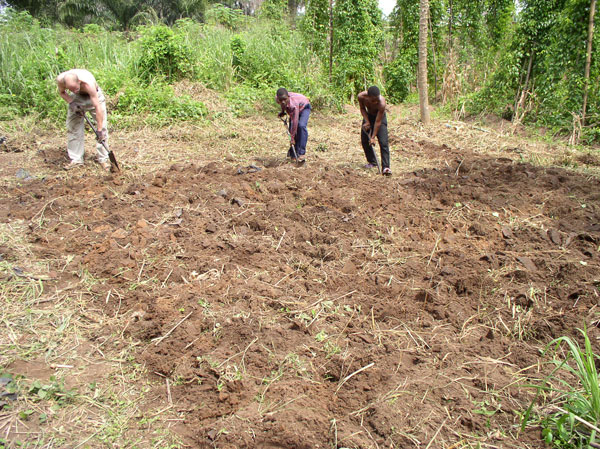
A couple of weeks ago, Amy, Isaac, and I planted our garden.  While neither of us is a natural “green thumb,” we enjoy working in the garden together.  We especially enjoy the fresh squash, tomatoes, peppers, and cucumbers that we’ll be eating in a few months.  But, as we’re quickly learning, fresh vegetables don’t come without a little sweat.  Tilling, planting, weeding, and watering all must be done routinely in order for the vegetables to grow.

One thing that has struck me about gardening is how destructive it is.  In order to plant seeds, one must first take a piece of ground and uproot it – tearing away the sod, turning up the dirt, digging out the weeds.  It is this act of uprooting and tearing up the ground that is the most difficult work of gardening.  Yet, laborious and undesirable as such work may be, it is worth it to create space for fresh produce to grow.

When Jeremiah was called to be a prophet, God told him that his work would be like planting a garden.  “Today I appoint you over nations and kingdoms to uproot and tear down, to destroy and overthrow, to build and to plant.  Surely Jeremiah must have been excited about that last part.  As God’s prophet, Jeremiah will have the opportunity to plant the seed of God’s hope-filled future.  It is Jeremiah who will get to deliver one of the most inspiring messages in the Bible: “ ‘For I know the plans I have for you,’ declares the Lord, ‘plans to prosper you and not harm you, plans to give you hope and a future’” (Jeremiah 29:11).

But before Jeremiah could plant that hope-filled seed, he would need to do the difficult work of uprooting, tearing down, destroying, and overthrowing.  In Jeremiah’s day, the people of Israel had wandered far away from God.  They worshiped idols, neglected the poor, and disregarded God’s Word.  In such a condition, the people of Israel were not fertile soil for God’s Kingdom.  If the seeds of hope were to be planted and take root in Israel, then the ground first needed to be prepared.  Things needed to changed.  Idolatry needed to be uprooted.  Injustice needed to be destroyed.  Corrupt leaders needed to be overthrown.  Someone needed to sound the alarm that everything is not okay.  Jeremiah is called to do just that.

Take some time this week to consider your own life.  What is God is calling you to uproot in your life to make space for the seeds of God’s peace to be planted within you?  What bad habits do you need to tear down?  What sin do you need to overthrow?  What barriers do you need to destroy in order to live more fully into God’s purpose for your life?  Such questions can be difficult to ask, and even more difficult to answer, but they are an important step in creating fertile ground in our hearts for the hope of God to be planted and to take root. 


Thursday, May 30, 2013

Jeremiah: Prophet for All Ages

Michelangelo's depiction of Jeremiah reminds us
that Jeremiah was a prophet who grieved over
the brokenness of his generation.

Next to the Book of Psalms, Jeremiah is the longest book of the Bible.  It’s 52 chapters are an anthology of sayings and events from the life of the prophet Jeremiah, whose prophetic career spanned forty years from 627-587 BC.  Our 2013 summer worship series at Faith UMC will center on key passages from this book.  In addition to weekly sermons, I’ll also be writing weekly reflections on this blog that will invite us to dive deeper into the message of Jeremiah.

Jeremiah’s influence has left at least one indelible mark on the English language.  According to Websters, a “jeremiad” is a “lamentation or doleful complaint.”  Indeed, as we will see, there is a lot of lamenting in the Book of Jeremiah.  Jeremiah was born into a difficult and challenging world.  In his lifetime, the mighty Assyrian empire crumbled, and Egypt and Babylon battled back and forth for the title of world power. 

In the midst of it all, Jeremiah and the Southern Kingdom of Israel (called Judah) lived in a time of anxiety and fear, unsure of what the future would hold for their small nation.  What is more, Jeremiah saw how far his people had strayed from the ways of God.  Idolatry was rampant in Israel, and the poor and needy were often neglected and forgotten.  Such difficult and dark days created plenty of reasons for Jeremiah to offer a “jeremiad.”

But that is not to say that the overall tone of the Book of Jeremiah is mournful and dour.  As a matter of fact, some of the purest expressions of hope are found in Jeremiah’s prophecy.  In the midst of a turbulent world, Jeremiah was a man of God-inspired vision.  Where most people saw only chaos and turmoil, Jeremiah was able to see and articulate God’s purpose at work in the world.  In the midst of the brokenness of his age, Jeremiah envisioned a new covenant, when God would break into history and restore the hope of God’s people. 

While our contemporary world is very different than Jeremiah’s, his message still speaks truth into our lives.  How many of us have lamented the current state of our world?  How many times have we broken down and cried at the harsh realities of life?  How many times have we wondered, “where is God?”  For us who know that something is wrong with the world, the voice of Jeremiah helps us to articulate our grief over the world’s ills, while also helping us to speak energizing words of hope in the midst of it all. 

My hope and prayer is that this summer journey into the Book of Jeremiah will inspire all of us with the hope of God, which comes to fullest expression in our savior Jesus Christ.  The journey starts this Sunday.  See you there!

Wednesday, December 19, 2012

A Devotion for the Third Week of Advent


The Revealing Power of Light

“The people walking in darkness have seen a great light” (Isaiah 9:2)

I don’t like going to the doctor’s office.  Rarely do I leave an appointment without feeling embarrassed, ashamed, sick, faint or disappointed.  Is there anything more humbling than to sit in a cold, stale room, wearing nothing but a thin sheet and hear the doctor say, “well, Mr. Parkinson, it appears you could stand to lose a few pounds.”  And yet, I go to the doctor anyway because it’s good for me.

When I was a teenager, my doctor’s office had the brightest overhead lights.  Sitting under those lights exposed every blemish.  I was so self-conscious about the revealing power of those lights that I would spend hours before a doctor’s appointment scrubbing underneath my fingernails, cleaning behind my ears, and applying moisturizer to every patch of skin that was even remotely dry.  If I was going to sit under those bright lights, then I needed to clean up.

Advent is a season of cleaning up in preparation for the coming of Jesus, the Light of the World.  Just like those overhead lights in the doctor’s office, the light of Christ exposes every blemish within us.  And while that may sound unpleasant, it’s not a bad thing.  Only when our infirmities are exposed can they be rightly diagnosed and treated.

John the Baptist came ahead of Jesus to witness to the Light (John 1:7).  His message was simple: “Prepare the way for the Lord” – get ready for the coming of the Light!  How should we get ready?  “Repent,” John says.  Clean up your act.  “Those with two tunics should share with those who have none, and the one who has food should do the same” (Luke 3:11).

In the final days of Advent, what blemishes are in our hearts that need to be cleaned up?  What news years resolutions do we need to make to live godly lives?  What sin do we need to repent of in order to be ready to stand in the Light of Christ?          

Wednesday, December 12, 2012

A Devotion for the Second Week of Advent

What are you Waiting For?

“God will wipe every tear from their eyes.  There will be no more death or mourning or crying or pain, for the older order of things has passed away” (Revelation 21:4)

Advent is a season of waiting.  Typically we think of waiting for the coming birth of Jesus, which we celebrate at Christmas.  But Advent is about waiting for so much more than that.  During Advent, we wait for the coming Kingdom of God.  We wait, we hope, we pray, in anticipation of that great and glorious day when Christ returns and true peace reigns in the world.  We wait for the day when God wipes every tear from our eyes – when crying and mourning and pain will be no more.

Last week, I experienced an “Advent moment” – a glimpse of everything we’re waiting for.  I was at “The Neighborhood Table,” the community supper hosted by our congregation in Sharpsburg.  At one point during the meal, I stood and looked over the crowd. 

At one table I saw a member of our congregation eating with an elderly women who often has no one with whom to share a meal.  At another table, I saw a deaf man talking with another member of our congregation through sign language.  At another table, I saw six middle schoolers eating what may have been the only hot supper they’ll have this week.  Across the room I saw old people, young people, rich people, poor people, white people, black people – all laughing, eating, sharing, and enjoying each other.

There was an energy in the room – a spirit of unity and peace.  When the meal was over people didn't want to leave.  Even after the kitchen was cleaned up people continued to linger, talking and enjoying fellowship.

I believe I was witnessing a glimpse of what we’re waiting for.  It was a taste of the Kingdom of God breaking out right there, among us.  That’s what Advent is about.  Advent isn't about waiting for presents or for a few days off to see family.  Advent is about actively waiting, looking, praying for the coming Kingdom of God.  And when we get a glimpse of the Kingdom, Advent invites us to rejoice, for God is with us!     

Wednesday, December 5, 2012

A Devotion for the First Week of Advent

Emmanuel at All Costs

"The virgin will be with child and will give birth to a son, and they will call him Emmanuel"--which means, "God with us" (Matthew 1:23). 

A few weeks ago a member of our congregation discovered that her friend was planning on spending Thanksgiving alone.  Without hesitating, she invited her friend over for Thanksgiving dinner.  It was a kind invitation offered with the firm conviction that there are certain times when no one should be alone.

True, each of us needs “alone time,” but none of us want to be alone all the time.  There are moments when there is nothing worse than being alone.  The highs and lows of life are best shared together.  It’s why we gather with friends and family for Christmas dinners, have visitations for persons in grief, throw birthday parties, and stop to see a friend when they've had a bad day.

Since we are created in God’s image and likeness, it should come as no surprise that God doesn't like to be alone either.  Our God is the God who refuses to be alone.  After all, we were created to be with God – to be God’s companions.  We were created to walk with God in close, personal relationship.  Sin is our choice to turn away from God – to leave God’s presence, and try to find our own way.

Advent is a time for us to remember the God who refuses to be alone.  Even though we turn away, God refuses to let us go.  The story of the incarnation is the story of God chasing us down.  On a starry night in Bethlehem God took on human flesh, and entered into the dirty, broken, messiness of life because God refuses to be without us.  Because, despite our sinful arrogance, God wants to be with us - forever.  Advent is a time to remember the God who is bound and determined to be Emmanuel “God with us.”

Tuesday, August 14, 2012

Fall 2012 Preview


As a new school year approaches, we’re getting ready for an active season of ministry at Faith UMC.  There are plenty of opportunities for you and your family to worship, grow, and serve with us this fall.  Here’s a brief preview of things to come:


Worship
§         Our 10:00 Sunday morning worship service is always the launching point for our ministry.  This fall, services will center around three successive sermon series:
           
1.      “Seven signs of Jesus” (September 2-October 14) - Who is Jesus?  What did he come to do?  Why does it matter to me?  In this series we explore the seven miraculous signs Jesus performs in the Gospel of John.  More than miracle stories, these events are signs that point us toward the heart of Jesus’ identity, message, and mission.

2.      “Beyond the Walls” (October 21-November 18) – In this series, we’ll articulate God’s dream for us to get Beyond the Walls of our church building and into our community, serving as the hands and feet of Jesus in the world.  The series culminates with commitment Sunday, when we pledge to support God’s mission by our prayers, presence, gifts, and service.

3.      “Prepare the Way” (December 2-December 23) – This Advent series invites us to prepare the way for the coming of Jesus by engaging Old Testament prophecy that point to God’s plan for our salvation, and its fulfillment in the person and work of Jesus.

§         Our choir will again be leading us in worship each Sunday, and will be sporting new robes this fall!  The choir is open to singers of any and all abilities.  Rehearsals are held each Thursday at 7:30 p.m.

§         This fall, Faith UMC is the proud sponsor of Belle Voci, a new community women’s choir that will be in residence at Faith.  The new choir will sing in our worship services twice this fall (October 14, and December 2).

§         This Advent, we’ll be forming our first Children’s choir.  The choir will meet over a four to six week period and will perform in the weeks leading up to Christmas.  More details are forthcoming.

Grow
Bible Times Theater is Coming this Fall!
§         Children’s Sunday School is experiencing a makeover this fall as we introduce the Bible Times Theater (BTT).  BTT  is a fun, theatrical journey through the great stories of scripture.  Walk in the shoes of Abraham, carry the staff of Moses, touch the robe of Jesus.  In BTT the story of God comes to life – and every child has a role to play!  Designed for ages 4-11, BTT is held every Sunday following the children’s message and begins September 9th.

§         Four small groups for adults are forming this fall.  They launch the week of September 9th.  You can sign up for them by calling the church office or visiting the “grow” page at faithfoxchapel.org:
           
1.      Rooted in the Word: Adult Sunday School (Sundays @ 8:30 a.m. in Fellowship Hall).  Bring your Bible, grab a cup of coffee, and enjoy a deep dive into the scriptures.  This group is for adults who seek a deeper relationship with God through Bible study and prayer.  Weekly Bible passages align with the weekly sermon, so that you'll come to worship prepared to hear God's Word proclaimed.  Childcare is available.

  1. Young Adult Fellowship (Tuesdays @ 7 p.m. at the Parkinson’s) Every week, this group enjoys a fellowship meal and Bible study.  Held in the Parkinson home, the group provides a comfortable, safe space to share in conversation.  This year's Bible study will focus on the Book of Acts.  The group is for single adults and parents with young children.  Childcare is provided.

  1. Women of Faith (Wednesdays @ 9:15 a.m. at Pittsburgh Mills Panera) Care for body and soul with this group of women.  Each week begins with a brief devotion and then a 45 minute mall walk.  This is a great time for deep conversation in a small group community of mutual support.  Children are always welcome.

  1. Faith Book Club (Fourth Saturdays @ 7 p.m. at Jenkins’) Engage your mind and heart by sharing in this book study.  Once a month, the group gathers to discuss a devotional book.  Held in the Jenkins' living room, this small group is a relaxed place to share in meaningful conversation about faith and life and to hold one another up in prayer.

Serve
Serving at the table has become a staple
in our ministry.
§         On August 30th, and one other date TBA we’ll be serving the meal at The Table, a community kitchen on the Southside.  We’re always looking for volunteers to help serve the meal, cook, and donate deserts.

§         Each month we collect non-perishable items for the Bread of Life Food Pantry.  Bring your items with you as an offering on Sunday mornings.  Here are the collection items for each month:

            September – Bath soaps, hand soaps
            October - Dishwashing detergent
            November – Flour, sugar
                                                                             December – Rice, boxed potatoes, kids cereal

§         On a date TBA, we will send a group to Global Links to sort surplus medical supplies that will be sent around the world to support local hospitals and medical clinics.

The November election will bring large crowds to Faith, which serves as a polling place.  Faith Grilfriends will be running a bake sale to support Imagine No Malaria and will need volunteers to donate baked goods and staff the table.

Fellowship
§         Enjoy a cup of coffee and a light snack every Sunday after the worship service during our weekly coffee fellowship.

§         Stay after worship on Sunday, September 23rd for our annual Open House pot-luck luncheon.  Details are forthcoming.

Why rush out of worship, when you can grab a cup of
coffee and enjoy a chat during Coffer Fellowship?
§         Our annual Fall Festival will be held after worship on Sunday October 14th.  There will be plenty of food and games and activities for children.

§         On Saturday, November 17th at 10 a.m. put on your game face for our first ever Faith UMC Turkey Bowl.  The young, the old, and the in between are invited to a good ole game of flag football, followed by lunch.  Come to play, or just come to watch!

§         Fox Hill preschool, a ministry of Faith UMC, is always looking for church members who are willing to come read to children, or share about there careers on career day.  Contact the church office for more details.

Thursday, August 9, 2012

Summer in Review


As summer vacations begin to wind down and a new school year approaches, we’re wrapping up an exciting and active summer of ministry at Faith UMC.  Since so many have been in and out town, I thought I’d take a moment to catch everybody up on what’s been happening @ Faith UMC.

§         We kicked off our summer with our annual church picnic.  Hot dogs and hamburgers were the menu of the day, and we enjoyed the opportunity to recognize and visit with the teachers of Fox Hill Preschool.

§         In the early weeks of June, 47 children participated in Fox Hill Preschool’s two week summer camp program.

§         On June 7-10, Patti Linder and Pastor Tom attended Annual Conference, where Pastor Tom was ordained.

Tori Konopasek and seven others have spent the summer
serving in Zimbabwe.
§         We commissioned Tori Konopasek for ministry, sending her off to Zimbabwe for six weeks to help develop the ministry partnership between the Western PA UMC and United Methodists in Zimbabwe.

§         On a Sunday afternoon in June, we had an English Tea, which featured a presentation on Pastor Tom’s Wesleyan pilgrimage to England.

§         We began a series of prayer walks in Sharpsburg.  18 people participated in 3 different walks, each with the purpose of prayerfully discerning future ministry opportunities in Sharpsburg.

Breakfast after a brave night camping at Faith!
§         We launched a brand new Cub Scout pack, #617.  Faith is serving as the chartering organization for this pack, which serves boys at Fairview Elementary School.

§         Our summer worship in the outdoor chapel was highlighted by special music from the likes of Devin Arrington (violin), Amy Parkinson (vocalist), Henry Tucker (vocalist), and Averie Shaughnessy (vocalist).

§         In early July, Pam and Ty Konopasek spent the week at the WPA UMC’s School for Mission at Grove City College.  They spent the week in worship, study, and service.  Ty worked hard on a series of community service projects.

§         On July 14-15, we had a Faith family Campout.  Several families enjoyed a hike, BBQ supper, games, family movie, and camped out on church grounds (through a stormy night).

§         On July 15 and 22 informational meetings were held for the congregation regarding the Beyond the Walls outreach campaign that we are considering.

The sanctuary was turned into an ocean as children dove
into God's Word at "Operation Overboard."
§         On July 22-26 we welcomed 41 children to Faith UMC for “Operation Overboard,” our 2012 Vacation Bible School.   

§         In late July, we received word that Bishop Tom Bickerton will remain as our bishop in Western PA for four more years.

§         In early August, we welcomed Rev. Keith Kaufold of Eighth Avenue Place in Homestead who challenged us to be a church that takes risks in order to invest in the lives of those who are poor and hurting.

§         While our plans to pass out watermelon at the 2012 Guyasuta Days Festival fell through, we were able to donate 25 watermelons to the children’s feeding ministry at the Sharpsburg Family Worship Center.

§         On August 19th, we look forward to wrapping up the summer with our annual Blessing of the Backpacks, and special music from percussionist Vince Wallace, who will play his marimba.

Friday, June 15, 2012

Thanks Dad!


Me and my dad, Jim Parkinson.

Last Sunday, thirteen years of prayer, education, and evaluation culminated in my ordination as an elder in the United Methodist Church.  Of all the delightful moments of that service, none was more thrilling for me than to be sponsored by my dad.

When I was seventeen years old, my dad lost his job.  After lots of prayerful discernment, he saw the lull in employment as God’s way of opening the possibility for him to enter full-time ministry.  In an incredible act of faith, my mom and dad decided to change course.  My father went to seminary, my parents took a SERIOUS pay cut, and in so doing they showed me the kind of commitment and dedication it takes to follow God’s call.

Four years ago, I stood and watched my father's ordination.  Four years later, my dad stood before the clergy session and made the motion for my ordination.  He, along with my family, laid hands on me as the bishop ordained me.  It was a moving moment – one that I will cherish always.

Adding to the power of the moment was the Bible I held in my hand during the ordination service.  It was my grandfather’s, who was a preacher and teacher in the Baptist Church.  In one moment, three generations of Parkinson's were connected in this holy moment we call ordination.

As father’s day approaches, I can’t help but share how grateful I am for my dad.  He’s not perfect.  He’d be the first to admit that.  But he’s a great father, and my ordination would not be possible without his love and care.  In a world with so many broken families, I’m blessed to have two great parents.  Happy father’s day dad!  

Tuesday, June 12, 2012

Taking it One Year at a Time


Itinerate - "To go from place to place, especially in a regular circuit."

Early Methodist preachers, called "circuit riders,"
itinerated by horseback. 
Last Saturday, Bishop Tom Bickerton appointed me for a third year of ministry at Faith UMC.  It was a joy to hear my name called to return to a place I love.  While my return to Faith was expected, it is never guaranteed.  In the UMC pastors itinerate, which means we are appointed to our places of service one year at a time.

Itinerancy is one of the most misunderstood aspects of our denomination's ministry.  To many church members, it can seem like a cruel way to treat pastors and their families.  To others it seems like an antiquated method of deploying pastors - a remnant of eighteenth century America.

I believe that itineracy - at its best - is a vital missional strategy of the church.  Rooted in the itinerant ministry of Jesus and the apostles, and the calling of the Holy Spirit, itinerancy allows bishops to move clergy to places where missional need matches clergy gifts.

While the bishop has the ultimate authority over appointments, no bishops acts alone in the process.  Each appointment is the result of the prayerful discernment of the bishop, the cabinet, clergy, and church members.  The great gift of itinerancy is that it allows space for communal discernment that can open up ministry possibilities that may have been thought impossible otherwise.

If I had been required to apply for a pastoral position, I probably would have thought myself under qualified to serve at a place like Faith UMC.  Further, if Faith was looking for its own pastor, they certainly would have looked for a pastor with more experience than me.  Itinerancy opened up the possibility for someone like me to serve at a place like Faith.

That said, itinerancy also means that we are working together one year at a time.  Every year we know that there's a chance I will be called to serve elsewhere.  While such uncertainty can be uncomfortable, I believe it has the ability to strengthen our congregation.  When we make plans for our long term future, we must always work together, so that ministry is the work of the Spirit by the hands of the congregation. Our ministry cannot be centered on a pastor.   Itinerancy is a reminder that ministry belongs to God, not to the pastor.

I'm honored to have a third year to serve at Faith.  I recognize that each year we have together is a gift, and my desire is to do everything I can to serve Jesus in this place...One year a time.

Tuesday, May 8, 2012

We've No Time to be Impatient


Pastor Mike Slaughter
Several weeks ago, I had the joy of returning to my home church for a leadership conference.  Among the many blessings of the day was the opportunity to hear from Mike Slaughter, Lead Pastor of Ginghamsburg UMC in Tipp City, Ohio.  Over the past 33 years, Mike has lead Ginghamsburg Church from a typical small town congregation of 90 worshippers to a vibrant, missionally-focused congregation with several thousand worshippers.

In his presentation, there were two phrases Mike repeated over and over that captured me: “I don’t have time to play church.” and “There are no quick wins.”

“I don’t have time to play church” means that there ought to be an urgency to the church’s ministry.  We don’t have time to waste with institutional structures and church programs that hold us back from reaching the world Christ came to save.  Now is the time to get serious about reaching the least, the last, and the lost with the radical grace of Jesus.

With this sense of urgency in mind, “there are no quick wins.”  In other words, reaching the world with the good news takes patience.  Disciples are not made overnight.  Congregation’s are not revitalized in one month.  Vibrant, faithful, fruitful ministry takes a long-term commitment – in the case of Ginghamsburg Church, about 33 years.

As I’ve been reflecting on these phrases, I’m realizing how true they are.  Jesus’ own ministry began with an urgent plea, “Repent, for the Kingdom of Heaven is near” (Matthew 4:17).  Jesus didn’t have time to play games.  He was about the work of the Kingdom and would not allow anything – especially the religious institution - to distract him from that work.

At the same time, Jesus’ ministry exemplified patience.  “There are no quick wins.”  Jesus demonstrates an amazing amount of patience with his disciples, who are very slow to realize what the Kingdom is all about.  The Kingdom movement that Jesus began with urgency doesn’t really take off until after Jesus has risen and ascended into heaven.  In short, Jesus proclaimed the Kingdom now, but knew that realizing the Kingdom in fullness would take patience and long-term commitment.

As we move forward in ministry at Faith UMC, I hope that we can sense the urgency of God’s mission.  There are people in our community who are hurting and who need the good news of Jesus RIGHT NOW!  We don’t have time to play church!  We’ve got important work to do!

At the same time, I hope that we will be patient.  The fruit of our ministry will not appear overnight.  Seeds sown today may not take root for years.  It’s okay.  As long as we’re being faithful to the work of the Kingdom, we can stay the course.  We’ve no time to be impatient.  

Wednesday, April 25, 2012

Kids Worship


“Jesus said to them: ‘Let the little children come to me, and do not hinder them, for the Kingdom of God belongs to such as these.’” (Mark 10:14)

Our children's message has become a central part of
weekly worship.  This Sunday, Kids Worship takes the
children's message to a new level.
When I was in seminary, I got to spend a summer interning at a church in rural North Carolina.  On my first visit to the church I was greeted by a church member and her six year old daughter, Hannah.  Hannah was full of life and energy, and she enthusiastically began giving me a tour of the church building.  She showed me her Sunday School room, the fellowship hall, and the playground.

When we came to the end of our tour, I was surprised that she hadn’t shown me the sanctuary.  “Aren’t you going to show me the sanctuary?” I asked.  “Oh, I don’t go in the sanctuary,” Hannah replied. “That room is for grown ups.”

As I got to know some members of the congregation, I realized very quickly that no one ever told Hannah she wasn’t allowed in the sanctuary, or that the worship space was for grown ups only.  No one needed to.  Actions speak louder than words.

In Hannah’s experience every time she walked into the sanctuary she was told to sit quietly, and was always given something else to do – like a coloring book – while the grown ups worshipped.  Hannah believed that the sanctuary was for grown ups because she never felt included or valued in anything that happened in that space.

From that day forward, I decided that I wanted to be the kind of pastor who made sure children understood that the sanctuary is for them, and that worship isn’t just for adults – it’s for the whole people of God.

This Sunday (April 29th), Faith UMC is having its first ever Kids Worship service.  Our 10:00 service will engage children in every aspect of worship.  The kids will not be dismissed part way through the service for Sunday School, and there will be no nursery care.  The children will be part of the entire service.


My hope is that such a time of worship will be inspiring not just for our children, but for our entire congregation.  Together, we have the opportunity to make sure our children know that the sanctuary is not a “grown ups only” space.  It’s a space for the young, the old, and everyone in between.

If you’re an adult coming to worship this Sunday, I hope you’ll come with a child-like spirit, ready and willing to surround, encourage, and support our children as they learn how to sing praise, pray, and engage the scriptures.  If you’re a parent, I hope you’ll let your child know ahead of time that they’re going to have the chance to participate in the service.  They don’t need to prepare anything, but they do need to know that their participation will make God (and the rest of us) smile.

I’ll see you in Kids Worship!