Thursday, June 27, 2013

We are Not Our Own

"I know, O Lord, that our lives are not our own, that we're not able to direct our paths" (Jeremiah 10:23).

It's not about me.  That might be one of the most difficult lessons to learn in our culture.  We live in a "me-first" culture, where my dreams, my interests, my goals are exalted above all else.  Yet, one of the fundamental messages of the scriptures is that if I put myself first, I am doomed to failure.

That's essentially what happened in Jeremiah's day.  Convinced that they knew a better way to live than the one God had designed for them, the people of Israel went their own way.  They made their own gods, with their own hands.  They made their own rules and laws.  They pursued their own dreams.  They ignored the God who freed their forbears from slavery in order to pursue their own way of life.

As the people of Israel would soon discover: God ways are higher than our ways, and God's thoughts higher than our thoughts.  Our ways will ultimately lead to our doom.  The destruction of Jerusalem and the exile of the people of Israel is the result of Israel's attempt to make their own way in life.

Jeremiah's reminder to the people of Israel is also a timely reminder for us.  "Our lives are not our own."  We didn't make ourselves.  We were made by God for God's purpose.  Everything we have, and everything we are belongs to God alone.  And that's a good thing, because all of God's ways lead to life.

Are you living your life for yourself, or have you surrendered your life to God?  Is your first priority your own desires, or do you seek what God desires for you?  What needs to change in your life in order for God to be first?  


Wednesday, June 19, 2013

Hypocrisy, The Church, and Following Jesus

Hypocrite: “A person who acts in contradiction to his or her stated beliefs or feelings.”

Run a Google search on the word “hypocrite” and you’ll discover that for many the word is synonymous with “Christian.”  According to the Pew Research Forum, hypocrisy is one of the most common reasons why many Americans don’t go to church. 

In his book They Like Jesus but not the Church, Dan Kimball writes, “Ask someone today if he or she likes Jesus, and the answer is usually yes.  But ask if that person likes the church, and chances are you will get a far less favorable response.”  While Jesus teaches a gospel of inclusion, grace, hope and love, Kimball notes that many have experienced the church as a place of exclusion, judgment, negativity, and rejection.  Sometimes when it comes to sharing Jesus with the world, the church gets in the way.

Lest we think that hypocrisy is a new phenomena, we remember that the struggle to live out our beliefs is as old as the human race.  In Jeremiah 7, God sends the prophet Jeremiah to the temple to convict the people of Israel of hypocrisy:

“Will you steal and murder, commit adultery and perjury, burn incense to Baal and follow other gods you have not known, and then come into this house which bears my Name, and say ‘we are safe?’ (Jeremiah 7:9-10).

The people of Israel were hiding their sins behind the walls of the temple.  They came to the temple on the Sabbath to make the proper sacrifices and confess their sins, but then they left and did whatever they wanted the rest of the week.  They treated God’s forgiveness as an excuse to do whatever they pleased.  They were hypocrites.

Jeremiah’s exhortation to the hypocrites of Israel is instructive: “Reform your ways and actions” (7:3).  In other words, practice what you preach.  True worship of God is not just what happens inside the temple.  True worship entails a total way of life.

James 2:26 says “faith without works is dead.”  Following Jesus entails much more than believing the right doctrines, saying the right prayers, or being in church every Sunday.  Following Jesus is a total way of life.  What we say and do on Sunday morning must cohere with how we live Monday through Saturday.

Is your life consistent with what you believe?  How does the faith you profess on Sunday morning impact the way you live the rest of the week?  In what ways are you hypocritical?  How can your life better reflect the values of Jesus?  How is God challenging you to “reform your ways and actions” so that you may live a life that reflects the gospel you believe?
      

Wednesday, June 12, 2013

Where is The Lord?


One of the most astonishing facts about Jeremiah's day and age was that the people of Israel had lost the book of Deuteronomy.  An entire book of the Bible, missing from the collective memory of the people of God!  An entire generation of Israelites grew up never hearing the Shema, perhaps the most important verse of the Old Testament:

         "Hear, O Israel, The Lord our God, The Lord is one.  Love The Lord your God with all
          your heart and with all your soul and with all your strength." (Deuteronomy 6:4-5)

Every time I recall this historical fact I find myself asking "How?  How do you lose memory of a sacred text like Deuteronomy?  How does a nation with generations of priests, scribes, and Bible teachers lose track of one of the most precious pieces of scripture?

The answer, according to Jeremiah, is that it didn't happen overnight.  It began at least one generation before Jeremiah's when "your fathers did not ask, 'Where is The Lord?'" (Jer. 2:5). It continued when the priests, the one's charged with maintaining Israel's relationship with God, stopped asking "where is The Lord?" (Jer. 2:8).  Finally, by the time Jeremiah was born, the Israelites, having forgotten the book of Deuteronomy, had "exchanged their glory for worthless idols" (Jer. 2:11).

There is a difficult lesson to be learned in all of this.  If we stop asking "where is The Lord," we just may find ourselves forgetting who we are as a people of God.  If we stop seeking God everyday of our lives, we will slowly fall away from God's path, until (like the people of Israel) we find ourselves astray in a foreign land, not looking anything like the people God has called us to be.

In our lives, it is typical for us to seek God in times of desperation and tragedy.  The tragedy of 9-11-01 is a great example.  Church attendance went through the roof the Sunday after the attacks, as people across the country asked, "Where is God in the midst of this?"

But we are far less inclined to ask "where is God?" in the midst of the ordinary patterns and rhythms of life.  Yet, it is when we seek God everyday that our faith is formed and grounded.  Then we are more prepared to face the unforeseen adversities of the future.  How do you seek God everyday?  How are you feeding your spiritual memory so that you won't forget all that God has done for you?

Wednesday, June 5, 2013

Jeremiah: The Gardener-Prophet

“Today I appoint you over nations and kingdoms to uproot and tear down, to destroy and overthrow, to build and to plant” (Jeremiah 1:10).

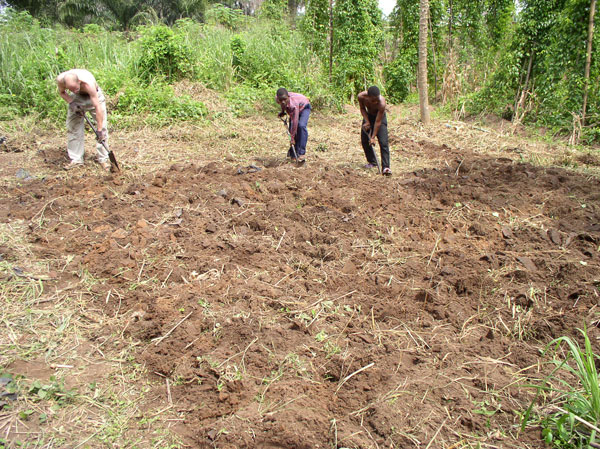
A couple of weeks ago, Amy, Isaac, and I planted our garden.  While neither of us is a natural “green thumb,” we enjoy working in the garden together.  We especially enjoy the fresh squash, tomatoes, peppers, and cucumbers that we’ll be eating in a few months.  But, as we’re quickly learning, fresh vegetables don’t come without a little sweat.  Tilling, planting, weeding, and watering all must be done routinely in order for the vegetables to grow.

One thing that has struck me about gardening is how destructive it is.  In order to plant seeds, one must first take a piece of ground and uproot it – tearing away the sod, turning up the dirt, digging out the weeds.  It is this act of uprooting and tearing up the ground that is the most difficult work of gardening.  Yet, laborious and undesirable as such work may be, it is worth it to create space for fresh produce to grow.

When Jeremiah was called to be a prophet, God told him that his work would be like planting a garden.  “Today I appoint you over nations and kingdoms to uproot and tear down, to destroy and overthrow, to build and to plant.  Surely Jeremiah must have been excited about that last part.  As God’s prophet, Jeremiah will have the opportunity to plant the seed of God’s hope-filled future.  It is Jeremiah who will get to deliver one of the most inspiring messages in the Bible: “ ‘For I know the plans I have for you,’ declares the Lord, ‘plans to prosper you and not harm you, plans to give you hope and a future’” (Jeremiah 29:11).

But before Jeremiah could plant that hope-filled seed, he would need to do the difficult work of uprooting, tearing down, destroying, and overthrowing.  In Jeremiah’s day, the people of Israel had wandered far away from God.  They worshiped idols, neglected the poor, and disregarded God’s Word.  In such a condition, the people of Israel were not fertile soil for God’s Kingdom.  If the seeds of hope were to be planted and take root in Israel, then the ground first needed to be prepared.  Things needed to changed.  Idolatry needed to be uprooted.  Injustice needed to be destroyed.  Corrupt leaders needed to be overthrown.  Someone needed to sound the alarm that everything is not okay.  Jeremiah is called to do just that.

Take some time this week to consider your own life.  What is God is calling you to uproot in your life to make space for the seeds of God’s peace to be planted within you?  What bad habits do you need to tear down?  What sin do you need to overthrow?  What barriers do you need to destroy in order to live more fully into God’s purpose for your life?  Such questions can be difficult to ask, and even more difficult to answer, but they are an important step in creating fertile ground in our hearts for the hope of God to be planted and to take root. 


Thursday, May 30, 2013

Jeremiah: Prophet for All Ages

Michelangelo's depiction of Jeremiah reminds us
that Jeremiah was a prophet who grieved over
the brokenness of his generation.

Next to the Book of Psalms, Jeremiah is the longest book of the Bible.  It’s 52 chapters are an anthology of sayings and events from the life of the prophet Jeremiah, whose prophetic career spanned forty years from 627-587 BC.  Our 2013 summer worship series at Faith UMC will center on key passages from this book.  In addition to weekly sermons, I’ll also be writing weekly reflections on this blog that will invite us to dive deeper into the message of Jeremiah.

Jeremiah’s influence has left at least one indelible mark on the English language.  According to Websters, a “jeremiad” is a “lamentation or doleful complaint.”  Indeed, as we will see, there is a lot of lamenting in the Book of Jeremiah.  Jeremiah was born into a difficult and challenging world.  In his lifetime, the mighty Assyrian empire crumbled, and Egypt and Babylon battled back and forth for the title of world power. 

In the midst of it all, Jeremiah and the Southern Kingdom of Israel (called Judah) lived in a time of anxiety and fear, unsure of what the future would hold for their small nation.  What is more, Jeremiah saw how far his people had strayed from the ways of God.  Idolatry was rampant in Israel, and the poor and needy were often neglected and forgotten.  Such difficult and dark days created plenty of reasons for Jeremiah to offer a “jeremiad.”

But that is not to say that the overall tone of the Book of Jeremiah is mournful and dour.  As a matter of fact, some of the purest expressions of hope are found in Jeremiah’s prophecy.  In the midst of a turbulent world, Jeremiah was a man of God-inspired vision.  Where most people saw only chaos and turmoil, Jeremiah was able to see and articulate God’s purpose at work in the world.  In the midst of the brokenness of his age, Jeremiah envisioned a new covenant, when God would break into history and restore the hope of God’s people. 

While our contemporary world is very different than Jeremiah’s, his message still speaks truth into our lives.  How many of us have lamented the current state of our world?  How many times have we broken down and cried at the harsh realities of life?  How many times have we wondered, “where is God?”  For us who know that something is wrong with the world, the voice of Jeremiah helps us to articulate our grief over the world’s ills, while also helping us to speak energizing words of hope in the midst of it all. 

My hope and prayer is that this summer journey into the Book of Jeremiah will inspire all of us with the hope of God, which comes to fullest expression in our savior Jesus Christ.  The journey starts this Sunday.  See you there!

Wednesday, December 19, 2012

A Devotion for the Third Week of Advent


The Revealing Power of Light

“The people walking in darkness have seen a great light” (Isaiah 9:2)

I don’t like going to the doctor’s office.  Rarely do I leave an appointment without feeling embarrassed, ashamed, sick, faint or disappointed.  Is there anything more humbling than to sit in a cold, stale room, wearing nothing but a thin sheet and hear the doctor say, “well, Mr. Parkinson, it appears you could stand to lose a few pounds.”  And yet, I go to the doctor anyway because it’s good for me.

When I was a teenager, my doctor’s office had the brightest overhead lights.  Sitting under those lights exposed every blemish.  I was so self-conscious about the revealing power of those lights that I would spend hours before a doctor’s appointment scrubbing underneath my fingernails, cleaning behind my ears, and applying moisturizer to every patch of skin that was even remotely dry.  If I was going to sit under those bright lights, then I needed to clean up.

Advent is a season of cleaning up in preparation for the coming of Jesus, the Light of the World.  Just like those overhead lights in the doctor’s office, the light of Christ exposes every blemish within us.  And while that may sound unpleasant, it’s not a bad thing.  Only when our infirmities are exposed can they be rightly diagnosed and treated.

John the Baptist came ahead of Jesus to witness to the Light (John 1:7).  His message was simple: “Prepare the way for the Lord” – get ready for the coming of the Light!  How should we get ready?  “Repent,” John says.  Clean up your act.  “Those with two tunics should share with those who have none, and the one who has food should do the same” (Luke 3:11).

In the final days of Advent, what blemishes are in our hearts that need to be cleaned up?  What news years resolutions do we need to make to live godly lives?  What sin do we need to repent of in order to be ready to stand in the Light of Christ?          

Wednesday, December 12, 2012

A Devotion for the Second Week of Advent

What are you Waiting For?

“God will wipe every tear from their eyes.  There will be no more death or mourning or crying or pain, for the older order of things has passed away” (Revelation 21:4)

Advent is a season of waiting.  Typically we think of waiting for the coming birth of Jesus, which we celebrate at Christmas.  But Advent is about waiting for so much more than that.  During Advent, we wait for the coming Kingdom of God.  We wait, we hope, we pray, in anticipation of that great and glorious day when Christ returns and true peace reigns in the world.  We wait for the day when God wipes every tear from our eyes – when crying and mourning and pain will be no more.

Last week, I experienced an “Advent moment” – a glimpse of everything we’re waiting for.  I was at “The Neighborhood Table,” the community supper hosted by our congregation in Sharpsburg.  At one point during the meal, I stood and looked over the crowd. 

At one table I saw a member of our congregation eating with an elderly women who often has no one with whom to share a meal.  At another table, I saw a deaf man talking with another member of our congregation through sign language.  At another table, I saw six middle schoolers eating what may have been the only hot supper they’ll have this week.  Across the room I saw old people, young people, rich people, poor people, white people, black people – all laughing, eating, sharing, and enjoying each other.

There was an energy in the room – a spirit of unity and peace.  When the meal was over people didn't want to leave.  Even after the kitchen was cleaned up people continued to linger, talking and enjoying fellowship.

I believe I was witnessing a glimpse of what we’re waiting for.  It was a taste of the Kingdom of God breaking out right there, among us.  That’s what Advent is about.  Advent isn't about waiting for presents or for a few days off to see family.  Advent is about actively waiting, looking, praying for the coming Kingdom of God.  And when we get a glimpse of the Kingdom, Advent invites us to rejoice, for God is with us!